
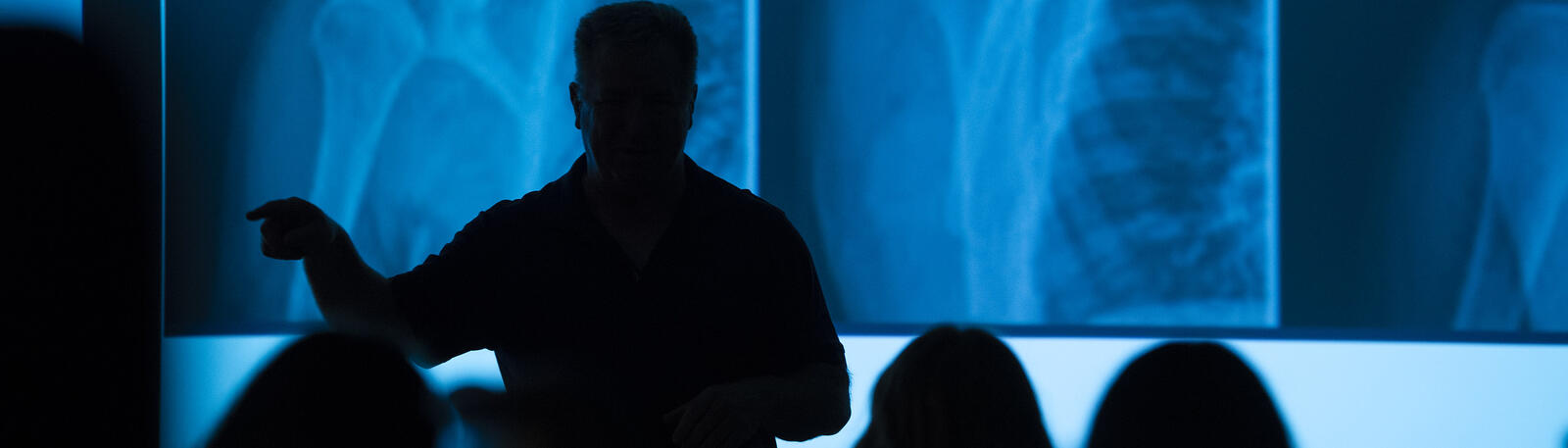
The Orthopedic Surgery Residency offers a robust curriculum that balances general orthopedics and subspecialty rotations, providing residents with extensive clinical exposure and academic training.
About the Program
Director: Matthew Cavo, M.D.
The five-year Orthopedic Residency Program curriculum is comprised of general orthopedics and subspecialty rotations. Overall, the residents acquire a broad spectrum of orthopedic training, experiencing the field both from the private practice perspective as well as full-time academic medicine. Because our program is designed to foster one-to-one resident-to-faculty mentor relationships, participating faculty monitor residents closely as they assume increasing responsibility throughout their training.
During residency training, each resident develops and completes a research project under the direction of department faculty. We emphasize and monitor education goals and protect resident conference time in order to further achieve those goals.
For more details, please read Typical Education Program for Residents.
Program Goal
Our program is committed to producing well-trained, academically-oriented orthopedic surgeons while adhering to all Accreditation Council for Graduate Medical Education (ACGME) and American Board of Orthopedic Surgery (ABOS) requirements and standards. The basic philosophy provides a broadly based orthopedic education, exposing residents to all major subspecialties. The learning environment, protected by strict rules, requires residents to attend all educational activities.
Clinical Exposure
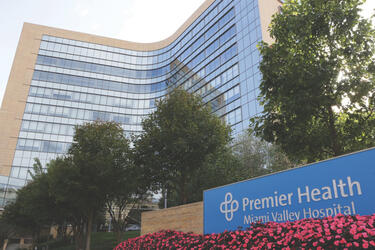
The five-year orthopedic residency program provides the resident a well-rounded clinical exposure with graduated responsibilities and exceptional supervised training. Residents receive extensive trauma experience, primarily at Miami Valley Hospital, a Level-I Trauma institution, where orthopedics is an important component of the surgical multidisciplinary team. Residents train in pediatric orthopedics at the Dayton Children's Hospital, providing many outstanding multidisciplinary clinics. Our residents receive additional joint replacement and adult reconstruction training at Miami Valley Hospital South, Atrium Medical Center, Wright-Patterson Air force Base Medical Center and the Dayton Veterans Affairs Medical Center.
Mentor-Based Training
Residents progress through subspecialty rotations in a mentor-based training system. This enables the resident to experience continuity of treatment from preoperative evaluation through surgery and postoperative treatment. Rotations consist of three-month blocks in each of the following subspecialties: Adult Reconstruction, Foot & Ankle, Hand, Joint Replacement Knee, Pediatrics, Shoulder & Elbow, Spine, Sports and Trauma.
ACGME Core Competencies for Resident Training
- Patient Care – Compassionate, appropriate and effective for treatment of problems and promotion of health
- Medical Knowledge – Basic science and clinical, established and evolving
- Practice-Based Learning and Improvement – Evaluating one's own care, changing practice by finding information and applying EBM
- Interpersonal and Communication Skills – Effective information exchange and collaboration with patients and colleagues
- Professionalism – Commitment to professional responsibilities, ethical behavior, sensitivity to diversity
- Systems-Based Practice – Using resources, improving system of care and patient safety
Accreditation
Since its inception at Miami Valley Hospital in 1973 under the leadership of Dr. Hobart Klaaren, the Orthopaedic Surgery Residency Program has maintained full accreditation from the Accreditation Council for Graduate Medical Education (ACGME) Residency Review Committee (RRC).
In 2007, the RRC approved an increase in the program complement from three residents per year to four residents per year, bringing the total number of residency positions to 22. In 2024, the program received approval for an additional residency position each year through a partnership with the United States Air Force in collaboration with our military partners at Wright-Patterson Air Force Base in Fairborn, Ohio. This expansion further strengthened the program's commitment to training both civilian and military orthopaedic surgeons.
Civilian residency positions are filled through the National Resident Matching Program (NRMP). Military applicants compete for positions through the military graduate medical education selection and matching process and are not eligible to participate in the NRMP for military-sponsored positions. However, military applicants who are granted a civilian deferred assignment may participate in the residency interview process and, if selected to interview, are eligible to enter the NRMP Match for available civilian residency positions.
The internship (PGY-1) conforms to the guidelines and requirements of the American Board of Orthopaedic Surgery (ABOS). In addition to the traditional five-year training track, the program offers a six-year track that includes a dedicated musculoskeletal research year between the first and second clinical training years. The Orthopaedic In-Training Examination (OITE) is administered nationally each fall.